
Skip to content

Industrial Wastewater Recycling System

Discover how mechanical vapor recompression can turn industrial wastewater into reusable process water while reducing disposal volumes and operating costs.

This guide explores how the technology works, its industrial applications, and the key considerations for implementing a wastewater reclamation system.

Up to 98% wastewater recovery

0.25 kWh per gallon treated

5 Available Éco-Smart® models


01 / MVR FUNDAMENTALS

What Is a Mechanical Vapor-Recompression Evaporator System?

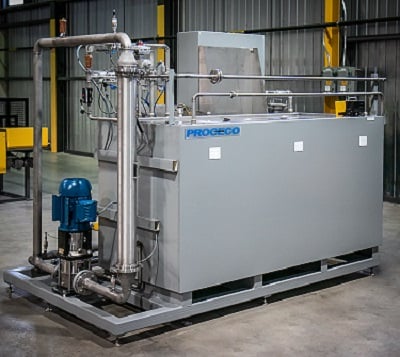
A mechanical vapor-recompression evaporator system is a wastewater treatment technology that separates water from contaminants through vacuum evaporation and vapor compression.

Unlike conventional thermal evaporators that continuously consume external heat from steam, natural gas, or electric heaters, an MVR system recovers and reuses the latent heat generated during evaporation. This dramatically reduces energy consumption while maintaining high water recovery rates.

Wastewater_Reclaimation_System
before-and-after-bearing-washing-water
Before and After BEaring Cleaning Solution Recycling
before-and-after-FPI-rinsing-water
Before and After FPI Rinse Water Recycling
before-and-after-FPI-die-casting-emulsion
Before and After Die Casting Releasing Lubricant Recycling

02 / THE TECHNOLOGY

How the PROCECO Éco-Smart® MVR System Works

  1. Step 1: Wastewater Preheating

    Incoming wastewater is preheated using heat already present in the outgoing distilled water stream. This heat recovery significantly improves overall efficiency.

  2. Step 2: Vacuum Evaporation

    The wastewater enters the main heat exchanger where evaporation occurs under partial vacuum. Operating under vacuum lowers the boiling point of water and reduces energy requirements.

  3. Step 3: Vapor Separation

    Generated vapor passes through a phase separator that removes entrained liquid droplets and contaminants before compression.

  4. Step 4: Mechanical Vapor Recompression

    A vapor compressor increases the pressure and temperature of the steam.  This compressed vapor contains reusable thermal energy that becomes the primary heat source for continued evaporation.

  5. Step 5: Condensation and Distillate Recovery

    The vapor condenses back into water within the heat exchanger. The resulting distillate is clean, high-quality water often suitable for reuse within manufacturing operations.

  6. Step 6: Concentrate Management

    The contaminants become concentrated into a significantly smaller waste volume. Instead of disposing of 100% of wastewater, facilities typically dispose of only the concentrated residual stream.

Key Insight

The real innovation of MVR technology is not evaporation itself. It is the recovery and reuse of latent heat, which dramatically lowers operating costs compared with conventional evaporation systems.

03 / RECYCLING WASTEWATER

Why Industrial Wastewater Recycling Matters More Than Ever

Water is increasingly becoming both an operational and strategic concern for manufacturers. Many facilities face:

  • Rising wastewater disposal fees

  • Increasing freshwater costs

  • More stringent environmental regulations

  • Sustainability targets and ESG commitments

  • Production quality issues caused by contaminated process water


Surface treatment operations, parts washing systems, heat treatment lines, FPI processes, and machining operations can consume thousands of gallons of water daily. Even efficient rinse operations eventually generate wastewater requiring treatment or disposal. The most progressive manufacturers are shifting away from a "use-and-dispose" mindset toward wastewater recycling and reuse.


04 / ÉCO-SMART® FEATURES

What Makes the Éco-Smart® Different?

Many wastewater treatment systems promise water recovery. Fewer deliver a compelling combination of recovery rate, energy efficiency, automation, and lifecycle economics.

Low Energy Consumption

The Éco-Smart® consumes approximately 0.25 kWh per gallon treated, making it one of the lowest-energy solutions in its category.

No External Heat Sources

The system does not rely on: Electric heaters, gas burners or steam boilers. This simplifies utility requirements and reduces operating expenses. 

No Cooling Water Requirement

The vapor condensation process eliminates the need for cooling water, creating additional utility savings.

Automatic Clean-in-Place (CIP)

An integrated CIP system helps remove scale buildup and maintain long-term heat-transfer efficiency while reducing maintenance interruptions.

Fully Automated Operation

The PLC-controlled platform continuously monitors performance and enables unattended operation.

Few Moving Parts

The design uses relatively few moving components and does not require membranes that must be routinely replaced.

“This is the most user-friendly design of any waste water treatment equipment that I have come across—we are able to operate it with nothing more than the recommended preventive maintenance labor, the rest has been fully automatic...”

Chem-Trend-logo
Rob Curtis
Chem Trend

05 / TECHNOLOGY COMPARISON

Mechanical Vapor Recompression vs. Other Wastewater Treatment Technologies

  Technology Water Recovery Energy Use Consumables Concentrate Reduction Reuse Potential
  MVR Evaporator
High - Up to 98% Very Low Minimal Excellent High
  Chemical Treatment Low Moderate High Limited Low
  Conventional Thermal Evaporation High High Moderate High High
  Membrane Filtration Alone Moderate Low Membranes Moderate Moderate
  Haul-and-Dispose None N/A N/A None None

The strongest advantage of MVR technology is that it simultaneously addresses:

 Water recovery    Disposal reduction   Process quality improvement   Long-term operating cost reduction


06 / APPLICATIONS

Industrial Applications for MVR Wastewater Recycling Systems

parts-washing-rinse-water

Parts Washing Rinse Water

Aqueous parts washers generate significant rinse-water volumes contaminated with oils, detergents, and suspended solids.

An MVR system recovers water that can often be returned to the process while significantly reducing waste disposal costs.

surface-treatment-rinse-water

Surface Treatment Rinse Water

Surface finishing operations such as cleaning, etching, pickling, and conversion coating consume large amounts of rinse water. Water recycling can dramatically reduce both incoming water requirements and discharge volumes.

FPI-rinse-water

FPI Rinse Water

Fluid Penetrant Inspection (FPI) systems produce dilute wastewater streams that are excellent candidates for MVR treatment because of their relatively high water content.

spent-metalworking-fluids

Spent Metalworking Fluids

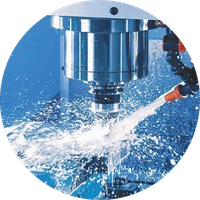
Machining operations often generate wastewater containing emulsified oils and metalworking compounds.

MVR technology effectively separates reusable water while concentrating contaminants into a manageable volume. 

heat-treatment-rinse-water

Heat Treatment Operations

Rinse and quench-related wastewater from heat-treating processes can be treated and reclaimed to reduce disposal requirements.

oily-die-casting-emulsions

Oily and Die-Casting Emulsions

Die-casting facilities frequently manage wastewater streams containing oils and emulsions that are expensive to haul away. MVR technology provides a practical recycling alternative.

07 / MODELS & CAPACITIES

Available Éco-Smart® Models

ES-400: 400 gal/day

Request Details

ES-800: 800 gal/day

Request Details

ES-1500: 1,500 gal/day

Request Details

ES-3200: 3,200 gal/day

Request Details

ES-6000: 6,000 gal/day

Request Details

08 / COST SAVINGS & ROI

Economic Benefits of Wastewater Recycling

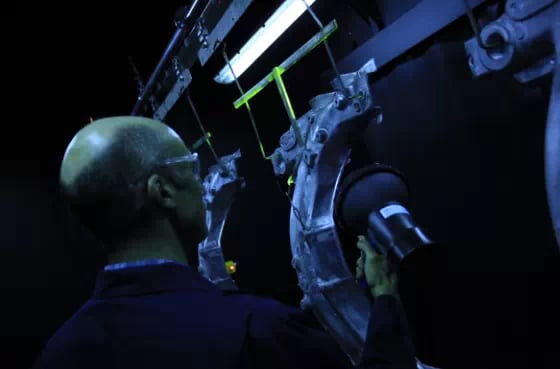
NDT-Fluorescent-penetrant-inspection-in-automotive-1

Fluorescent Penetrant Inspection Immersion Systems (FPI)

 Each liquid penetrant and FPI system is custom-designed to meet the customer's specifications, parts, and production output criteria. 
Direct Savings

Facilities typically see reductions in:

  • Waste hauling costs
  • Freshwater purchases
  • DI/RO water production and treatment costs 
  • Sewer discharge fees
  • Chemical replenishment costs
  • Labor associated with waste handling

Indirect Savings

Less obvious advantages include:

  • Improved process consistency
  • Reduced downtime
  • Lower regulatory risk
  • Better sustainability performance
  • Increased production capacity

09 / CUSTOMER CASE STUDY

Case Study: Hydraulic Cylinder Manufacturer

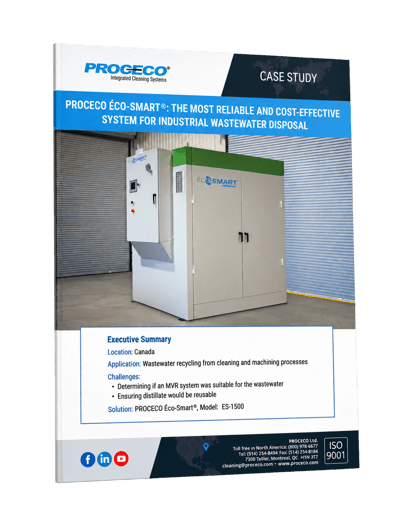
A hydraulic cylinder manufacturer generating approximately 1,400 gallons of wastewater per day needed an internal treatment solution to avoid costly third-party waste disposal. The wastewater contained oil, alkaline detergents, metalworking fluids, and metals.

Challenges

  • Determining MVR suitability

  • Managing free oil contamination

  • Ensuring reusable distillate quality

  • Maintaining low operator involvement

  • Achieving a rapid financial payback 

Solution

PROCECO conducted wastewater characterization and determined MVR technology was suitable. An oil skimmer was recommended to reduce free oil loading, while activated carbon polishing was incorporated to reduce trace hydrocarbons in the distillate.

Results

  • Up to 98% wastewater recovery

  • Distillate suitable for reuse

  • Compliance with discharge limits

  • Approximately 96% reduction in treatment costs

  • Payback period of less than one year

  • Improved cleaning and surface-treatment consistency

Information Gain: The Hidden Quality Benefit

Most wastewater discussions focus on disposal savings. However, one of the most overlooked advantages is process stability. When recycled water is readily available at low cost, manufacturers can refresh cleaning and rinse tanks more frequently. The result is improved bath control, more consistent chemistry, and better product quality. This operational benefit can be as valuable as the disposal savings themselves. 

10 / IMPLEMENTATION

Best Practices for Successful Implementation

01-characterize-wastewater

1. Characterize the Wastewater

Always perform laboratory analysis before selecting equipment. Key parameters: Oil and grease, TDS, COD, pH, Metals, Chlorides, Fluorides, Phosphates

02-remove-free-oil

2. Remove Free Oil Upstream

Simple oil separation can significantly improve evaporator performance and reduce maintenance requirements.

03-pre-treatment

3. Pre-Treatment Process

Ensure the wastewater has a neutral or slightly alkaline pH. In some cases, treatment for heavy metals is also required.

03-post-treatment

4. Consider Post-Treatment

Some wastewater streams may benefit from activated carbon polishing or additional finishing treatment before reuse.

04-optimize-water-usage

5. Optimize Water Usage First

Recycling & water conservation: Counterflow or Cascade rinses, Spray recovery, Improved part drainage, Conductivity-controlled rinse systems, Carbon Filters, UV light, DI Mixed Bed process or RO membranes

Ultrafiltration (UF): A Complementary Water Treatment Technology

While the PROCECO Éco-Smart® MVR system is ideal for recovering water from dilute wastewater streams, ultrafiltration (UF) is designed to remove emulsified oils and suspended solids from process solutions. PROCECO's ceramic membrane UF systems can extend cleaning bath life, reduce chemical consumption, and lower waste disposal costs.

For applications with high oil content, UF is often used alongside MVR technology. The UF system removes oils and solids upstream, allowing the evaporator to operate more efficiently and maximize water recovery.

Discover PROCECO's UF Technology 

Ultrafiltration-systems-for wastewater-treatment-and-recycling

Build ROI into the design

The Éco-Smart® is specifically positioned as a wastewater reclamation solution capable of supporting closed-loop operation by extracting dissolved contaminants and replenishing processes with recycled water. 

OUR PARTNERS

11 / EVALUATE YOUR WASTEWATER

Reduce Wastewater Costs Without Sacrificing Production Quality

For manufacturers generating rinse water, metalworking fluid waste, FPI wastewater, or surface-treatment effluent, a mechanical vapor-recompression evaporator system offers a practical path toward water reuse, lower disposal costs, and greater operational sustainability.

The PROCECO Éco-Smart® combines high water recovery rates, exceptionally low energy consumption, automated operation, and scalable capacity to help facilities transition from wastewater disposal to wastewater reclamation. With recovery rates of up to 98%, rapid payback potential, and support for closed-loop manufacturing processes, it represents one of the most effective technologies available for industrial wastewater recycling.

Ready to evaluate your wastewater stream? Contact a PROCECO wastewater treatment specialist for a wastewater assessment, recovery analysis, and customized ROI evaluation.